Wednesday, March 23, 2016

19.
Title: [Batman: The Man Who Laughs]
Author: Ed Brubaker
Genre: Comics
Medium: Paperback
Acquisition: IS Research
Date Completed: March 21, 2016
Rating: ****

One of the constant draws of The Joker is the uncertainty of his past; though narratives are offered from time to time (*cough*AlanMoore*cough*), even these "definitive" stories are challenged by the ambiguity of the character himself: he is literally not to be trusted. Ever. Even in the naming of his own past. This is one of the characteristics which makes him a memorable, and lasting, antagonist.  The Man Who Laughs is purportedly a re-telling (re-inking, re-publishing?) of the original 1940 comic, which saw the introduction of a strange jester.  I say "purportedly" only because I have not yet managed to read Batman #1, though I will.  In his first introduction, the Joker is all chaos - and nameless, given his famous moniker by the press as he mysteriously poisons Gotham elite (and anyone else who is inconveniently placed).  Arkham Asylum has not yet opened when the Joker first murders a reporter and cameraman in front of its gates, leaving an impression inside and out before he ever takes up residence.

As a story, it is a bit lackluster, given all the Joker will come to do.  As an origin, it's successful, providing the first and only really trustworthy beginning point of the villain who becomes Batman's mirror.

Monday, March 21, 2016

I'm not sure what counts as spoilers for comics readers; I tend to treat them like Shakespeare and other classic literature, in which the conclusion is already widely known, even by those who haven't actually read the book.  I don't think I've "given away" anything extraordinary here, but my apologies to any who disagree.

18.
Title: [Death of the Family]
Author: Scott Snyder and Greg Capullo
Genre: Comics
Medium: Paperback
Acquisition: IS Research
Date Completed: March 20, 2016
Rating: *****

I'm finding it difficult to review this book casually; every time I begin writing I come to conclusions and observations I wish to save for the paper I'm crafting, and so I come back to square one.  The basics are straight forward: this New 52 title is a play on its predecessor, Death in the Family in which the Joker violently beats Jason Todd to death (at the encouragement of fans who voted, if I'm not mistaken).  Though this may read, and in the moment does, as a hugely significant narrative moment, for the Joker death is just another day at work, and play.  His history is tumultuous, with a few constants: mayhem, Arkham Asylum, and Batman.

In this new arc the Joker escapes one and uses another in order to achieve the full attention of the third, targeting the "Bat family" in the belief that they have sentimentalized Batman, and therefore made him weak, and thus less of a capable adversary. For an antagonist who identifies so intensely with his protagonist, this holds serious implications, and a year after disappearing from the asylum he sets out to "right" their dynamic through exceptional violence worthy of the most psychotic Joker arcs.

I sought out this book specifically looking for a moment of violence - when the Joker has his face removed by the Dollmaker, leaving it on a wall as a bloody calling card; this is apparently viewed as a moment of "rebirth" for the figure, and it's pertinent to my current research to think about what this means.  This moment proceeds the current book, but that doesn't detract from its interest. One point of contention I have is a major missing story - that of Catwoman. Though the Joker singles her out as a member of the "family," she is suspiciously missing from the final reunion.

Most of my conclusions and observations will (hopefully) end up in a paper this term, so I'll just end simply: I liked it.  More so, I think, than The Killing Joke, and certainly more than Death in the Family.
17.
Title: [Masculinity, Crime and Self-Defence in Victorian Literature: Duelling with Danger]
Author: Emelyne Godfrey
Genre: Masculinity, Victtorian, History
Medium: Paperback
Acquisition: IS Book 6
Date Completed: March 19, 2016
Rating: ****

In Masculinity, Crime, and Self-Defence in Victorian Literature, Emelyn Godfrey approaches shifting cultural values of manliness and the reading of violent reaction to crime through an examination of communicative cultural objects – the literature, plays, newspapers, and commercial advertisements which both reflect and direct the responses of the audience. For Godfrey’s project, manliness is particularly defined by gentlemanliness, recalling the restraint and abhorrence of violence described by Ben Griffin in The Politics of Gender. The principles of the “savage” and the “natural” violence of men, so often cited as a conscious interest for Victorians, is acknowledged as the “other” against which gentlemen are defined – they who have morally evolved past such brutishness to restrained morality.  This dichotomy is reflected in the “blood men” – i.e. those who respond violently – and their more thoughtful counterparts (Holmes is a strong example used by Godfrey). But what of chivalry and manliness? Of self-defense? Godfrey’s work details how such necessary violence is defined by Victorians in response to the uncivilized brutes (i.e. criminal lower classes, or “blood men”), and whether or not self-defense and even retaliation are manly.

I admit that I find myself a bit distracted by Godfrey’s source material – specifically the material goods offered to promote the successful manliness of gentlemen, and their reversal of symbolism as they fall out of favor (handguns, for example). I’ve long worked with the material construction of identity of female characters in literature, and Godfrey’s accoutrements offer tantalizing possibilities to carry this over to masculine characters (oh, the anti-garroting collars! Life-preservers! The “monstrous fashion” for handguns! p.119).

In a more broad sense, Godfrey’s work on the “average” (i.e. white, middle-class, male) citizen offers a lens through which one can read popular vigilante heroes in novels, media, comics, and our own sensationalized news.

I really enjoyed this book for both its methods, and its histories.  While the readings of the Whitechapel Murders were pointedly shallow and seemingly insignificant to the project, tangentially related for being of a time and sensationalized in the press, the readings of literature as reflective of a reaction to the perception of criminal threat were pointed and thoughtful, offering strong conclusions and suggesting areas of further research.

Sunday, March 13, 2016

16.
Title: [Fire Touched]
Author: Patricia Briggs
Genre: Urban Fantasy
Medium: Hardback
Acquisition: Pre-Ordered
Date Completed: March 9, 2016
Rating: ***

The latest in the Mercy Thompson series, Fire Touched has received rave reviews on LibraryThing.  Though I, too, share much of the enthusiasm as these readers, I have to beg to differ on their love of this latest.  To be direct, I found it to be an incredible disappointment.

Why?  Because nothing happens.

I've long looked to Briggs as a consistent fantasy author whose work I know will deliver a certain level of entertainment.  She writes interesting characters, and is consistent throughout, developing each personality in linear (i.e. believable) ways.  Her protagonist is compelling and sympathetic, and the whole work has a strong mix of reality versus fantasy that makes it both familiar and escapist. However, the active arc of Fire Touched is dry and mechanical as compared to much of the series thus far.  From the first, Mercy and the wolf pack are used as an extension of the police force, and their presence is more like a weapon than sentient participants.  Something bad happens, the wolves are called in, and everything is resolved.  Even the social conflict between fae and the rest is glossed over, and very little is done to build this tension.  There are so many moments which could have been entertainingly (but consistently!) dramatic, but things are neatly and quietly resolved in the blink of an eye.

Despite the title there is very little fiery about this story.

Sunday, March 6, 2016

Whoops, missed one.

15.
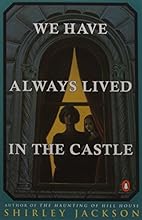
Title: [We Have Always Lived in the Castle]
Author: Shirley Jackson
Genre: Gothic Satire
Medium: Paperback
Acquisition: Work Text
Date Completed: February 23, 2016
Rating: ****

I teach Shirley Jackson's last (and, in my opinion, best) novel as a companion to One Flew Over the Cuckoo's Nest for a unit on madness which explores the complications of "untrustworthy" narrators, the labeling of mental illness, social commentary, and perspective.  Mary Katherine Blackwood is undoubtedly different; though her actions aren't condoned  in the "real" world, the satire of the text offers her a compelling sense of sympathy which makes for a curious and enjoyable reading experience.  My students are often surprised when I bring up what they already know - MK identifies her age as 18 within the first paragraph, but students often gloss over this in reading her tone, which is much younger - and are quick to vilify her for her aggressive fantasies (i.e. wishing death and pain on the townsfolk she is forced to interact with twice a week).  They toss around the work "psychopath," no doubt because of our fist reading of Kesey, and so this time around I found the "test" for psychopathic disorder, and we systematically checked her behaviors against the list, with two other prominent characters - with wonderfully surprising results.  I won't say more, so as to avoid spoilers, but actually attempting to diagnose the characters provided a unique perspective on the text, and brought the satire into sharp focus.
13.
Title: [Victorian Masculinities]: Manhood and Masculine Poetics in Early Victorian Literature and Art
Author: Herbert Sussman
Genre: Masculinity Studies
Medium: Paperback
Acquisition: IS Book 4
Date Completed: March 4, 2016
Rating: ***1/2

A driving concern of Herbert Sussman’s account of early Victorian artistic grappling with gender is the recognition of a spectrum of masculinity, even within the confines of white bourgeois normativity. In introducing his primary representative symbol, Sussman suggests that “the monk becomes the extreme or limit case of the central problematic in the Victorian practice of masculinity … the figure through whom Victorian men in a mode of historicized psychology could argue their widely varied views about self-discipline, the management of male sexuality, and the function of repression” (3), and through subsequent chapters illustrates the myriad of readings of this symbol by early Victorian artists as they articulate their own anxieties and definitions of manliness and its cultural/social/biological constructions. More important than these individual readings is what Sussman endeavors to show as  whole: that, though prevalent, “compulsory heterosexuality and compulsory matrimony” as touted by the moral middle class is not the only estimation of Victorian manliness, and that even this normativity is “exceedingly difficult to maintain” (13).

Like Kimmel, griffin, and Bederman before, Sussman begins by identifying tensions and anxieties which necessitate an Othering, in order to affirm a sense of selfhood and positive identity. But unlike these other texts, Sussman does not seem to forward a grand narrative of masculinity for his chosen object (the early Victorian white bourgeois man), and instead demonstrates variance which illuminates cultural uncertainty. Sussman is taking Kimmel’s pervasive homosociality, and perhaps the heroic artisan, and broadening its scope.


Topics of interest:
On page 82 Sussman cites the fears of poets such as Browning that their literary work, though definitively masculine in the nineteenth century, is somehow still “women’ work,” and that they are in fact feminizing themselves through their interiority – by staying within their own heads.  This “within” reminds me of Griffin’s descriptions of the Victorian household, and the contentious space of the home in Kimmel: that man should be the ruler of the domestic space, but that this space ultimately threatens his masculinity. I am interested in the potential connection here to the earlier argument that “For Browning, pornography exemplifies the driving of male desire into the inner cloister of the mind, the warping of virility by the puritanical constrains of bourgeois England” (75). Body versus mind (neurasthenia? – Bederman 84), industry versus domesticity.


14.
Title: [Houdini, Tarzan, and the Perfect Man]: The White Male Body and the Challenge of Modernity in America
Author: John F. Kasson
Genre: Masculinity Studies
Medium: Paperback
Acquisition: IS Book 5
Date Completed: March 4, 2016
Rating: ****

First, I’ll just say that I really enjoyed the narratives offered by Kasson; Sandow, Houdini, and Burroughs are engaging representations of nineteenth-century popular culture, and the biographic attention to each was certainly entertaining. However, I hesitate to agree with the lavish praise Linda K. Kerber gives on the book’s cover.

John K. Kasson’s Houdini, Tarzan, and the Perfect Man explores the bodily construction of late-nineteenth century American masculinity, forwarding Kimmel’s readings of bodily control and construction and reading the performances of manhood in both the acts and flesh of three exemplary popular figures. The book purports to “help us understand more about how the shift to an advancing technological civilization was communicated to an apprehended by publics in North America and abroad. They tell us about how modernity was understood in terms of the body…” (19), but is more intimately concerned with the white male body in popular culture, and how manliness was constricted by others than just Roosevelet (moving beyond Bederman to the “Othered” class of Kimmelian self-made middle class men). Kasson’s text is either too short, or too long; extensive biographies could be trimmed to become a strong lecture, or the accounts could be more fully developed to link the reader’s gaze to the larger gestures made in the introduction to modernity and technology.

The chapters on Sandow, Houdini, and Tarzan each offer the stripped bodies of performing men to represent linear constructions of manhood in struggle – against self, against institutions, against biology and race. That two invite bodily contact – and even penetration/invasion – as assertions of their value raises interesting implications; that they likewise manipulate and make use of popular culture to forward their careers demonstrates a kind of masculinity which moves beyond strong white bodies.

In thinking of the popular culture of the strong white male body, I find myself connecting Sandow to freak shows, and Houdini as a anachronistic reminder of the entertaining deviant – the acceptable vigilante who upholds his own moral bounds and flirts with the destruction of institutions (jail breaking and mad-house escaping, and, ok, Batman – and I’ve just ordered The Devil’s Workshop).

Saturday, February 20, 2016

12.
Title: [Manliness & Civilization: A Cultural History of Gender and Race in the United States, 1880-1917]
Author: Gail Bederman
Genre: Masculinity Studies
Medium: Paperback
Acquisition: IS Book 3
Date Completed: February 20, 2016
Rating: ***1/2


The concluding remark of Gail Bederman’s Manliness and Civilization is thus: “This study suggests that neither sexism nor racism will be rooted out unless both sexism and racism are rooted out together” (239), articulating the thesis which connects the previous readings of Ida B. Wells, G. Stewart Hall, Charlotte Perkins Gilman, T. Roosevelt, and Tarzan. These rhetor’s, Bederman asserts in her introduction, articulate the various “remakings” of masculinity in America at the turn of the century, each considering the role of civilization, race, and gender in defining ideological manhood. Central to the text is the interconnectivity of race and gender, echoing the “othering” likewise central to Kimmel, and the class divide demonstrated by MPs in Griffin.

Bederman’s introduction begins with a literal fight, between Jack Johnson and the “white hope” Jim Jeffries, and the cultural and journalistic violence that erupts when Johnson wins the heavyweight match. Johnson’s performances illustrate warring masculinities, and well introduces Ida B. Wells’ efforts against lynching culture and the figure of the primal rapist, which becomes central to the entire volume. Writes Bederman, “Lynching, as whites understood it, was necessary because black men were uncivilized, unmanly rapists, unable to control their sexual desires” (46).

Chapter one on “Remaking Manhood” defines expectations of manhood versus masculinity at the turn of the century, detailing the struggles between men and feminizing civilization, the women’s movement, and savages. Biology and evolutionary theory are used to argue that Anglo-Saxons are more evolved, and therefore better suited to power and gender constructions; “savage” races lack strong gender distinctions, therefore marking their inferiority. The White City and the World’s Fair become a strong backdrop for their historic construction, as races and gender are strictly and literally regulated in the organization of the event; to add to this history I’d like to bring up H. H. Holmes, the “first” American serial killer who took advantage of the spectacle of the fair as he murdered women and sold their remains as skeletal medical specimens.

The second chapter details the efforts of Ida B. Wells and her anti-lynching campaign, in which she rejected the horrific image of the “Negro rapist” (48). In her campaign, Wells compellingly asserts that white lynchers are less evolved and less mainly for their savage violence, proving their black victims are superior in gender and culture (58, 59, 73). Gender is crucial to both sides of this discourse, as definitions of manliness are at stake, in direct relation to the violation or protection of femininity (specifically, white womanhood).

Unfortunately, Wells’ efforts fail, as chapter three and the discussion of G. Stanley Hall demonstrates. As a researcher in education, Hall advocates for savage boyhood as a cure for the white cultural ailment of neurasthenia. Hall subscribes to the belief of recapitulations, and his work seeks out the “super-man” – he who demonstrates the cultural and intellectual superiority of the Anglo-Saxon, and draws on the physical health and strength that comes from a “Savage” youth encouraged in violence and untamed physical exertion. In Bederman’s reading of Hall I see Kimmel’s aggressive American masculinity, and the prizing of the capacity for brutality that continues today.

Though the writing is highly repetitive, I find these first chapters to be thoughtful and compelling, and can well place Bederman’s reading in larger gender discourses of which I’m aware. The following chapter on Gilman though, is deeply problematic. Specifically, Bederman’s readings of Gilman’s experiences with Dr. Mitchell and the rest cure. According to Bederman, Gilman is diagnosed with neurasthenia following her marriage, for which Dr. Mitchell prescribes the infamous rest-cure. Bederman forces this history into her own narrative, failing to identify the malady as post-partum depression, Gilman’s maternal experiences, her violent rejection of the treatment, and her literary attacks on Dr. Mitchell, to whom she sends a copy of “The Yellow Wallpaper.”  This short story goes far in discrediting the rest cure, but does not fit Bederman’s readings of neurasthenia, and so is left out. From my perspective this feels careless, and leads me to question conclusions about which I am less familiar. That said, the racial/gender binaries which Gilman forwards are both shocking and historically grounded, and she thus serves as a persuasive example of American feminism’s contentious relationship with racial minorities.

The conclusion, focusing on Tarzan and drawing on Roosevelt’s performative masculinity from chapter five, marries each of these chapters to show they are not disparate ideas, but a larger rewriting of turn-of-the-century masculinity. And it is here that most of my discussion points focus, as I’d like to consider Tarzan of the book, Tarzan as a Disney character, and manhood as performed for contemporary children. I’d also like to go back and think of Jack Johnson in light of the development of the whole, and H. H. Holmes of Devil in the White City.

Tuesday, February 16, 2016

11.
Title: [One Flew Over the Cuckoo's Nest]
Author: Ken Kesey
Genre: Fiction
Medium: Paperback
Acquisition: Work Text
Date Completed: February 10, 2016
Rating: *****

Last spring, I concluded my Kesey lectures offering a defense of Nurse Ratched, suggesting that gender politics and perspective potentially color her unfairly; this semester my current studies in Masculinity inspired me to take another look at Dale Harding, and I spent a wonderfully heated morning discussing with students whether or not Harding may be the true antagonist.  I'm not sure if I won everyone over, but it was a fantastic exercise, both for the gender studies potential, and to encourage students to push back and become active participants in discourse, especially when they disagree with the rhetorical "authority" figure.

Now, on to [North and South], [Manliness and Civilization], and [We Have Always Lived in the Castle].

Friday, February 5, 2016

10.
Title: [The Politics of Gender in Victorian Britain: Masculinity, Political Culture and the Struggle for Women's Rights]
Author: Ben Griffin
Genre: Masculinity Studies
Medium: Paperback
Acquisition: IS Book 2
Date Completed: February 5, 2016
Rating: ****

The Politics of Gender in Victorian Britain takes for its subject the culture of gender in the Victorian Parliament, seeking to understand the negotiations of masculinity and feminisms to consider how the established patriarchy supported, opposed, and legitimized early feminist movements as a law-making body. Griffin forwards that “the gendered identities of politicians shaped particular legislative outcomes” (7), and that “an anatomy of a patriarchal state” may help breach artificial limitations of research in historical feminism which, while not incorrect, “hermetically seal[s]} the subject from other cultural contexts (8). Griffin’s efforts are to place feminist history more broadly in Victorian culture by examining patriarchal responses to suffragists, feminists, and the changing cultural space in which they operate. Griffin’s project is achieved through an examination of Parliamentary reports published in three reputable newspapers, which were themselves the early sources of Parliamentary records.  These papers serve as efficient cultural artifacts, having preserved the discourses essentially in real time, without the editorial efforts of Parliamentary secretaries.

“Why did so many men change their minds about women’s suffrage?” Griffin asks, as he outlines his project (17). The answers, he posits, help break the isolation and aggregation of traditional feminist studies by examining the culture at large through the study of the ruling body of wealthy white men.  “…[D]ebates about women’s rights were often also debates about masculinity, and … politicians’ actions were fundamentally shaped by the identities that they constructed as men” (309). Like Kimmel, Griffin identifies a shift in gendered culture with the American Revolution; as Kimmel describes early American masculinity forming as a rejection of the oppressive father, British masculinity retreated into the home, seeking to reestablish the patriarchy through the authority of the family unit.  In chapter two, Griffin discusses “The domestic ideology of Victorian patriarchy,” and the gendered spheres of the Victorians which are largely familiar.  Griffin states, however, that these separate spheres do not provide a space of power for women; rather, one’s domestic authority (largely related to property rights and the financial maintenance of the family) is a performance of one’s masculinity, and thus greater political authority.  Questions of marital unity, and the definition thereof, are discussed, with their cultural and religious definitions.  This leads directly to two major points of discourse in the Victorian parliament, and Griffin’s study: domestic abuse and property rights.  For nineteenth-century MPs, the two become inherently linked.

The question of how and why a powerful body would relinquish control of a marginalized class is a significant one, especially as even partial liberation requires and acknowledgment of failure on the part of the rulers. This is initially achieved through the vilification of working class men; Griffin recounts that the earliest acquiescence are allowed when MPs consider the plight of honest working-class women being victimized by drunken scoundrel husbands.  By law, these women are without protection, and Parliament recognizes that a husband’s rule may in face be detrimental when the husband in question is willing to, say, beat his pregnant wife in order to take the money she’s saved for her confinement, for drink. Chapter three examines the class lines of masculinity, and how the characterization of lower class “tyrannical” (88) husbands as drunken and bestial allow MPs to artificially divorce their own masculinity from these brutes, and pass laws chivalrously protecting women of lower classes by allowing them to control their own incomes, while retaining their own household authority and preserving the myth that domestic abuse and moral lapse are conditions of the poor.   

Chapter four shifts to a reading of religious changes in the mid- to late-nineteenth-century which challenge the earlier understanding of women as “naturally” (i.e. Biblically) subservient to men, who are made to serve as the ruling class. Changes in religious thought, such as the belief that the Bible cannot actually be taken as a word-for-word historically-accurate text, allow for Victorians to challenge assumptions of sex. St. Paul, who is often cited by anti-suffragists, is now read as a product of his times rather than a direct guide to gendered expectations forwarded by the church, and the masculinity is redefined to include necessitous care and compassion for wives, as opposed to draconian control.

These cultural tug-of-wars continue throughout the book, and Griffin demonstrates how lawmakers wade through evolving cultural and religious beliefs to acknowledge cases of necessitous female autonomy (in property rights, maternal rights, etc). For my own research purposes, I found chapters five and six most interesting – those concerning paternal rights (which concerns the “natural” parenting qualities of women) and the performance of masculinity within Parliament itself (especially dress, mannerisms, and self-control).

Recommended for anyone interested in legal and cultural history, feminism, masculinity, and/or the Victorians. 


Tuesday, February 2, 2016

9.
Title: [Jack Sheppard]
Author: William Harrison Ainsworth
Genre: Nineteenth Century
Medium: Paperback
Acquisition: IS Book 3
Date Completed: February 1, 2016
Rating: *****

Murder, revenge, daring escapes, and a fashionable anti-hero: an indulgent recipe for not just movies and comic books, but a nineteenth-century "Newgate novel" that fictionally recounts the history of a notorious eighteenth-century thief.  Jack Sheppard, published serially by William Aisnworth between January 1839 and February 1840, capitalizes on the sensational reputation of an historical figure, presenting to the Victorian audience an escape artist and "master housebreaker" caught in over twenty years of revenge and mistaken identities. The novel is grand in its style, for all of its melodrama, and perfectly delicious (especially for those who are likewise inclined).

As a character, Jack is highly romantic, identifying his turn to crime as a response to the denial of affection in his youth, but maintaining a marginal loyalty to all in the household that extends to the novel's conclusion.  Within the novel Jack is as desirable a character as he must have seemed to his nineteenth century readers - well dressed and well groomed, his attractive features win him the admiration of women, and his daring escapades win him the respect of lower-class men. Ainsworth portrays him as a victim of fate and criminal machinations, offering readers the excuse for sympathy and fondness which would otherwise be denied a notorious criminal. For my own part, of course, I am endlessly fascinated to the attention to material details - the extent to which Ainsworth describes the physical features, and dress, of particular characters (i.e. not all receive the same attention). This one is certainly a keeper.

Enjoy stories of heists or cowboys or pirates or other adventuring sorts?  Then this one is for you.